


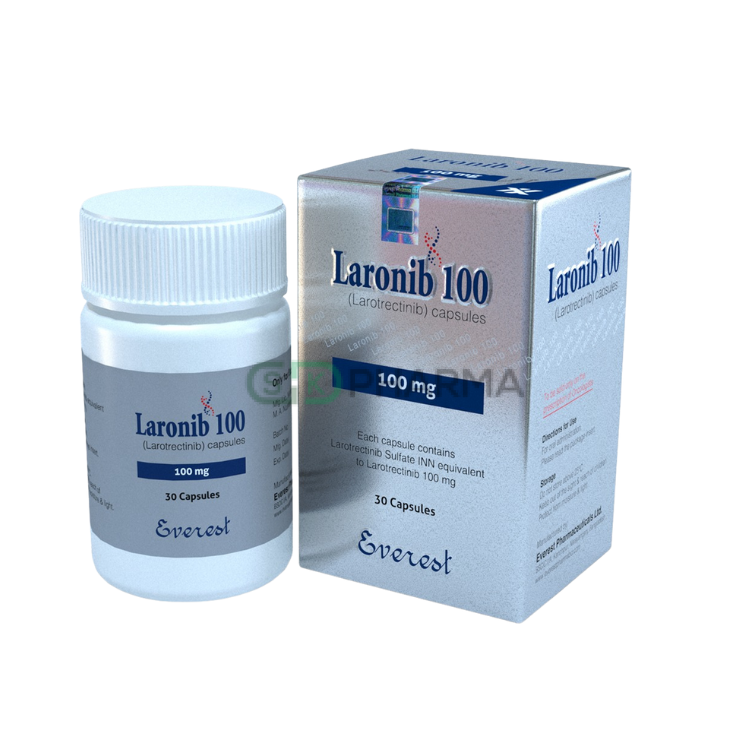
Laronib 100 mg (Larotrectinib)
-
 ৳18.80
৳20.00 -
৳3.33
৳3.50 -
৳5.64
৳6.00 -
৳8.46
৳9.00
![Recur Tablet 1 mg (Finasteride [For Androgenic Alopecia])](https://www.skpharma.com.bd/public/uploads/all/mqB5zpgTubYSB0CMtn0XXhQtwBc22ia6JfYbyrMt.png)


Reviews & Ratings
Laronib 100 mg, containing Larotrectinib, is an oral selective tropomyosin receptor kinase (TRK) inhibitor indicated for the treatment of solid tumors in adults and pediatric patients that harbor neurotrophic tyrosine receptor kinase (NTRK) gene fusions. This therapy is suitable for patients with locally advanced or metastatic cancers where surgical resection is not feasible or may result in significant morbidity. Larotrectinib is a tumor-agnostic therapy, meaning it targets the specific genetic mutation driving the cancer rather than the tumor’s location in the body.
Description
Laronib 100 mg is designed to selectively inhibit the activity of TRK proteins (TRKA, TRKB, TRKC), which are produced by NTRK gene fusions. These gene fusions lead to the abnormal activation of TRK proteins, promoting uncontrolled cell proliferation and tumor growth. By blocking TRK activity, Larotrectinib interrupts the signaling pathways that drive cancer cell survival, leading to tumor regression and disease control. The oral formulation ensures convenient daily administration for both adults and children.
Pharmacology
Larotrectinib is a potent, selective, ATP-competitive inhibitor of TRK kinases. It binds to the active site of TRK proteins, preventing phosphorylation and downstream signaling through pathways such as RAS/MAPK, PI3K/AKT, and PLCγ, which are essential for cancer cell growth and survival. Larotrectinib demonstrates high bioavailability after oral administration and is metabolized primarily in the liver via CYP3A4. Its pharmacokinetic profile allows for continuous once- or twice-daily dosing depending on patient age and weight.
Dosage & Administration
The recommended dosage of Laronib 100 mg varies by patient age and weight:
-
Adults: Typically 100 mg orally twice daily, with or without food.
-
Pediatric Patients: Dosage is based on body surface area (BSA) and weight, generally 100 mg/m² twice daily, up to the adult maximum dose.
Capsules should be swallowed whole and not crushed or chewed. Dose adjustments may be required in patients with hepatic or renal impairment, or in cases of significant adverse effects. Treatment should continue as long as clinical benefit is observed and toxicity is manageable.
Drug Interactions
Laronib is metabolized by CYP3A4, and co-administration with strong CYP3A4 inhibitors (e.g., ketoconazole, clarithromycin) can increase drug exposure, while CYP3A4 inducers (e.g., rifampicin, phenytoin) can reduce its effectiveness. Concomitant use with medications that prolong the QT interval should be done cautiously.
Contraindications
Laronib is contraindicated in patients with a known hypersensitivity to Larotrectinib or any excipients in the formulation. Use caution in patients with severe hepatic or renal impairment.
Side Effects
Common side effects include fatigue, nausea, vomiting, diarrhea, dizziness, and increased liver enzymes. Less frequent but serious adverse effects may include hepatotoxicity, neurological symptoms, and hematologic abnormalities. Most side effects are manageable with dose adjustment or temporary interruption of therapy.
Pregnancy & Lactation
Safety in pregnant or breastfeeding patients has not been established. Effective contraception is recommended for both men and women during treatment and for a period after the last dose. Breastfeeding is not advised while taking Larotrectinib due to potential drug transfer in milk.
Precautions & Warnings
Regular monitoring of liver function, complete blood counts, and ECGs is recommended during treatment. Patients should report new neurological symptoms, persistent nausea, vomiting, or signs of liver toxicity promptly.
Therapeutic Class
TRK (Tropomyosin Receptor Kinase) Inhibitor / Targeted Therapy
Storage Conditions
Store in a cool, dry place below 30°C, away from light and moisture. Keep out of reach of children.
Related Products

Acaluxen 100 mg (Acalabrutinib)

Ibrutix 140 mg (Ibrutinib)

Fitaro 1 mg (Semaglutide) Injection

Ibruxen 140 mg (Ibrutinib)
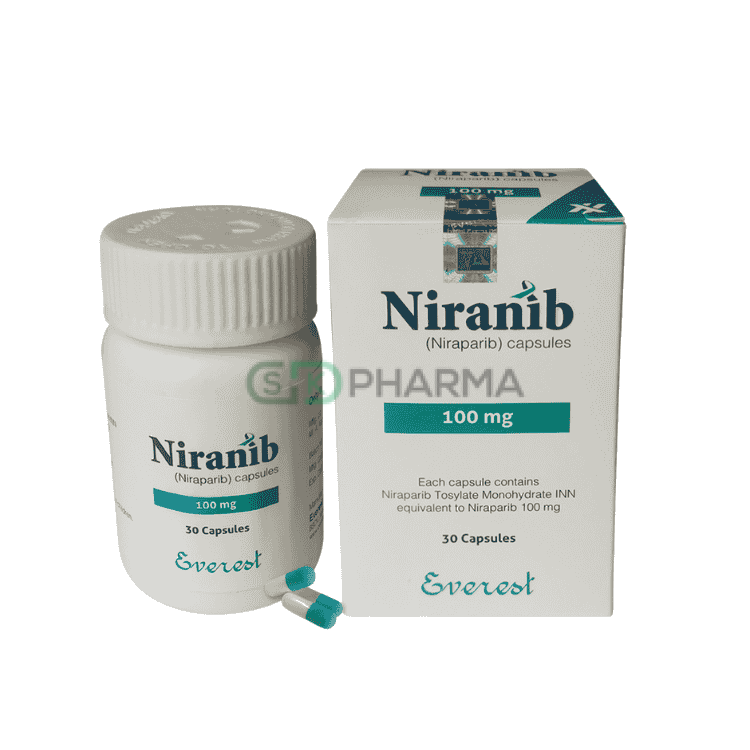
Niranib 100 mg (Niraparib)

Selcaxen 40 mg (Selpercatinib)

Semaglo 0.25 mg (Semaglutide) Injection

Osikin 80 mg (Osimertinib)

Deucrava 6 mg (Deucravacitinib)

Tagrix 80 mg (Osimertinib)
Product Queries (0)
Login Or Registerto submit your questions to seller
Other Questions
No none asked to seller yet
-
৳18.80
৳20.00 -
৳3.33
৳3.50 -
৳5.64
৳6.00 -
৳8.46
৳9.00


