


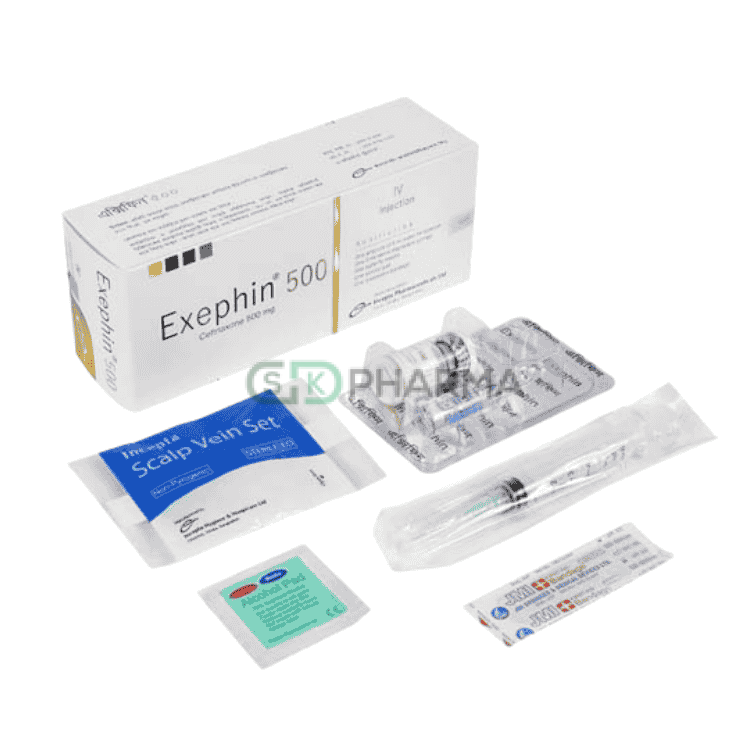
Exephin Injection 500 mg/vial IV (Ceftriaxone Sodium)
-
 ৳18.80
৳20.00 -
৳3.33
৳3.50 -
৳5.64
৳6.00 -
৳8.46
৳9.00
![Recur Tablet 1 mg (Finasteride [For Androgenic Alopecia])](https://www.skpharma.com.bd/public/uploads/all/mqB5zpgTubYSB0CMtn0XXhQtwBc22ia6JfYbyrMt.png)


Reviews & Ratings
Exephin 500 mg/vial is a third-generation cephalosporin antibiotic widely used for the treatment of serious bacterial infections. With its broad-spectrum activity against Gram-positive and Gram-negative bacteria, it provides potent bactericidal effects. Exephin 500 mg/vial is administered parenterally via intravenous (IV) or intramuscular (IM) injection, offering flexibility in treating hospitalized patients or those with severe infections. Its relatively long half-life allows for once-daily dosing in many clinical situations.
রেজিস্টার্ড চিকিৎসকের পরামর্শ অনুযায়ী ঔষধ সেবন করুন
Therapeutic Class
Third-generation cephalosporin antibiotic
Indications
Exephin 500 mg/vial is indicated for treating the following infections:
-
Lower respiratory tract infections: pneumonia, bronchitis
-
Acute bacterial otitis media
-
Skin and soft tissue infections
-
Urinary tract infections
-
Gonorrhea (uncomplicated cases)
-
Bacterial septicemia
-
Bone and joint infections
-
Meningitis
-
Prevention of postoperative infections
-
Perioperative prophylaxis associated with surgery
Its broad-spectrum activity and high tissue penetration make it effective in both community-acquired and hospital-acquired infections.
Pharmacology
Exephin acts by inhibiting bacterial cell wall synthesis, binding to penicillin-binding proteins and preventing peptidoglycan cross-linking. This disrupts cell wall formation, leading to bacterial lysis. It is highly stable against beta-lactamases, which protects it from enzymatic degradation by resistant bacteria.
-
Protein binding: 95%
-
Plasma half-life: 6–9 hours
-
Excretion: 40–65% unchanged in urine; remainder via bile into feces
-
Metabolism: Not metabolized
Its pharmacokinetic profile supports once or twice-daily dosing, even in severe infections.
Dosage & Administration
Adults:
-
Standard dose: 1–2 g IV or IM once daily (or in divided doses twice daily)
-
Maximum: 4 g/day
-
Gonorrhea: 250 mg IM single dose
-
Surgical prophylaxis: 1 g IV 30–120 minutes before surgery
Infants & Children (≥1 month):
-
General infections: 50–75 mg/kg IV/IM once daily (max 2 g/day)
-
Otitis media: 50 mg/kg IM single dose (max 1 g)
-
Meningitis: 100 mg/kg IV/IM once daily (max 4 g/day)
Administration:
-
IM injection: Dissolve in Lidocaine HCl 1%
-
IV injection: Dissolve in Water for Injection, administer over 2–4 minutes or by infusion over 30 minutes (10–40 mg/mL concentration)
-
Test dose recommended to check patient tolerance
Contraindications
-
Hypersensitivity to cephalosporins or other beta-lactam antibiotics
Side Effects
Exephin is generally well tolerated. Reported adverse reactions include:
-
Gastrointestinal: diarrhea, nausea, vomiting, stomatitis, glossitis
-
Cutaneous: rash, pruritus, urticaria, edema, erythema multiforme
-
Hematologic: eosinophilia, thrombocytopenia, leucopenia, anemia, neutropenia
-
Hepatic: elevated SGOT/SGPT, bilirubinemia
-
CNS: headache, dizziness, confusion, sleep disturbances, convulsions
-
Local: rare phlebitis at injection site, minimized with slow injection
Precautions & Warnings
-
Monitor for anaphylactic reactions; administer IV epinephrine and glucocorticoids if severe
-
Rare gallbladder “sludge” may occur, reversible on discontinuation
-
Prolonged therapy requires regular blood count monitoring
-
Not recommended for premature neonates or newborns ≤28 days
Pregnancy & Lactation
-
Use only if clearly indicated; safety in pregnancy not established
-
Low concentrations excreted in breast milk; caution advised
Overdose
-
No specific antidote; treatment is supportive and symptomatic
Storage
-
Store in a cool, dry place below 30°C, away from light and moisture
-
Keep out of reach of children.
Related Products

![Oralon Mouthwash 0.20% (Chlorhexidine Gluconate [0.2%])](https://www.skpharma.com.bd/public/uploads/all/wgUk6vJ9C2FyIoWudqjzceGSCAUlBX278H9o4YA3.png)
Oralon Mouthwash 0.20% (Chlorhexidine Gluconate [0.2%])
Daunobin Injection 20 mg/4 ml (Daunorubicin)

Zolidon Tablet 400 mg (Linezolid)

Azomid Suspension 1% (Brinzolamide)
Irinox Injection 20 mg/ml (Irinotecan Hydrochloride)

Product Queries (0)
Login Or Registerto submit your questions to seller
Other Questions
No none asked to seller yet
-
৳18.80
৳20.00 -
৳3.33
৳3.50 -
৳5.64
৳6.00 -
৳8.46
৳9.00


