


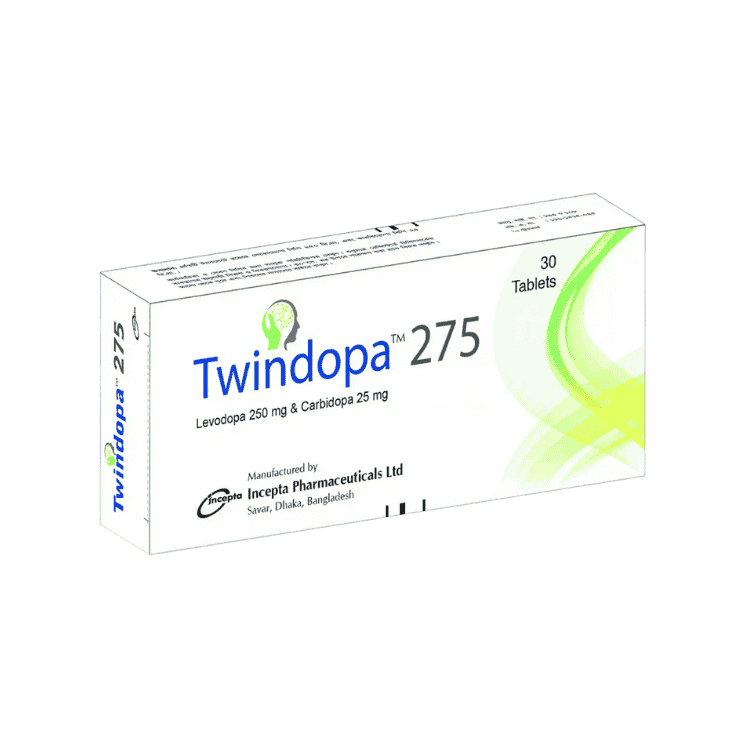
Twindopa Tablet 250 mg+25 mg (Levodopa + Carbidopa)
-
 ৳18.80
৳20.00 -
৳3.33
৳3.50 -
৳5.64
৳6.00 -
৳8.46
৳9.00
![Recur Tablet 1 mg (Finasteride [For Androgenic Alopecia])](https://www.skpharma.com.bd/public/uploads/all/mqB5zpgTubYSB0CMtn0XXhQtwBc22ia6JfYbyrMt.png)


Reviews & Ratings
Twindopa Tablet 250 mg + 25 mg is a combination therapy containing Levodopa and Carbidopa, widely used in the management of Parkinson’s disease and Parkinsonian syndromes. This formulation is designed to relieve the motor symptoms associated with Parkinson’s, including tremor, rigidity, bradykinesia (slowness of movement), and postural instability.
Levodopa, a precursor of dopamine, replenishes the deficient dopamine levels in the brain, which is the primary cause of motor dysfunction in Parkinson’s disease. Carbidopa, a peripheral decarboxylase inhibitor, prevents the conversion of Levodopa to dopamine outside the brain, thereby increasing the availability of Levodopa to the central nervous system and reducing peripheral side effects such as nausea and hypotension.
Twindopa provides a reliable and effective solution for both early and advanced Parkinson’s disease, improving mobility, reducing tremors, and enhancing patients’ overall quality of life.
রেজিস্টার্ড চিকিৎসকের পরামর্শ অনুযায়ী ঔষধ সেবন করুন
Therapeutic Class
Anti-Parkinson Agent
Indications
Twindopa Tablet 250 mg + 25 mg is indicated for:
-
Parkinson’s disease: Relieves symptoms of tremor, rigidity, bradykinesia, and postural instability
-
Parkinsonian syndromes: Beneficial in secondary Parkinsonism caused by drug therapy or neurodegenerative disorders
-
Motor symptom management after stroke or trauma: Enhances rehabilitation outcomes when motor recovery is impaired due to dopamine deficiency
Levodopa plus Carbidopa therapy can also be used to reduce “off” periods and motor fluctuations in patients receiving long-term dopaminergic therapy.
Pharmacology
Levodopa is a dopamine precursor that crosses the blood-brain barrier and is converted into dopamine by the enzyme dopa decarboxylase, replenishing the depleted neurotransmitter in the striatum.
Carbidopa is a peripheral dopa decarboxylase inhibitor that prevents the premature conversion of Levodopa to dopamine outside the central nervous system. This combination:
-
Increases the amount of Levodopa available in the brain
-
Reduces peripheral side effects like nausea, vomiting, and cardiovascular disturbances
-
Allows lower doses of Levodopa to be administered effectively
Approximately 70–80% of the administered Levodopa is absorbed from the gastrointestinal tract. Peak plasma levels are typically reached within 1–2 hours, and the elimination half-life is about 1–3 hours.
Mode of Action
-
Levodopa: Increases dopamine levels in the brain to restore normal motor function
-
Carbidopa: Prevents peripheral breakdown of Levodopa, enhancing central nervous system availability
-
Combined Effect: Improves motor symptoms while minimizing side effects such as nausea and hypotension
Dosage and Administration
Adults:
-
Initial dose: 1 tablet (250 mg Levodopa + 25 mg Carbidopa) 2–3 times daily, depending on disease severity
-
Maintenance dose: Adjusted according to clinical response, typically 2–6 tablets daily in divided doses
-
Maximum daily dose: Determined individually by the physician based on patient tolerance
Administration Instructions:
-
Take orally with or without food, preferably at consistent times daily
-
Swallow the tablet whole with a full glass of water
-
Avoid abrupt discontinuation, which can exacerbate Parkinsonian symptoms or lead to withdrawal effects
Special Populations:
-
Elderly patients may require lower starting doses due to increased sensitivity to dopaminergic side effects
-
Dose adjustments may be necessary in patients with renal or hepatic impairment
Drug Interactions
-
MAO inhibitors: Can lead to hypertensive crises; discontinue MAO inhibitors at least 2 weeks prior to Levodopa therapy
-
Antipsychotics: May reduce Levodopa efficacy due to dopamine receptor blockade
-
Iron supplements: May impair absorption of Levodopa
-
Antihypertensives: May interact with dopaminergic effects, leading to orthostatic hypotension
Contraindications
Twindopa Tablet is contraindicated in:
-
Hypersensitivity to Levodopa, Carbidopa, or any excipients
-
Narrow-angle glaucoma
-
History of melanoma or undiagnosed skin lesions
-
Severe cardiovascular or psychiatric disorders
Side Effects
Common adverse effects include:
-
Nausea and vomiting
-
Orthostatic hypotension (dizziness on standing)
-
Dyskinesia (involuntary movements) with long-term use
-
Sleep disturbances or vivid dreams
-
Psychiatric symptoms such as confusion, hallucinations, or agitation
Less common effects may include dry mouth, palpitations, or constipation. Dose adjustments usually mitigate adverse reactions.
Precautions and Warnings
-
Monitor for motor fluctuations and adjust dosage accordingly
-
Caution in patients with cardiovascular disease, history of peptic ulcers, or psychiatric disorders
-
Use with care in elderly patients due to increased sensitivity to side effects
-
Long-term therapy may require “drug holidays” under physician supervision to manage motor complications
Pregnancy and Lactation
-
Safety during pregnancy has not been fully established; use only if clearly needed
-
Excretion in human milk is not well studied; caution is advised for nursing mothers
Storage Conditions
-
Store in a cool, dry place, away from direct sunlight
-
Keep out of reach of children.
Related Products
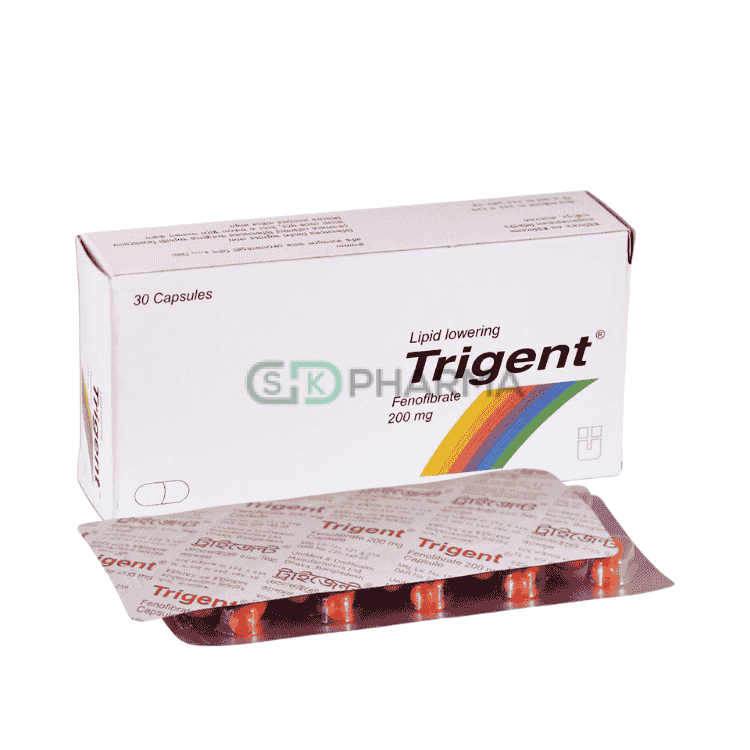
Trigent Capsule 200 mg (Fenofibrate)

Acmina Syrup (Mustakarista)
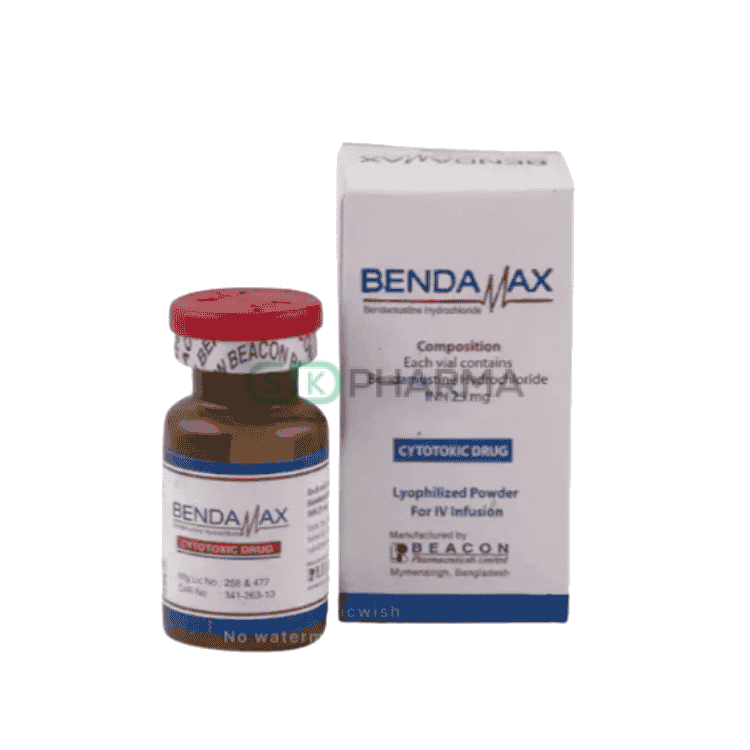
Bendamax Injection 25 mg/vial (Bendamustine)

Ornical Capsule 120 mg (Orlistat)

Nobesit Tablet 500 mg (Metformin Hydrochloride)

Gatiflox ES Eye Drop 0.50% (Gatifloxacin)

Napsod Tablet 275 mg (Naproxen Sodium)

Minolac Injection 60 mg/2 ml (Ketorolac Tromethamine)
Lubrimax Eye Drop 1% (Carboxymethylcellulose Sodium)

Pediavit Syrup (Multivitamin + Cod Liver Oil)
Product Queries (0)
Login Or Registerto submit your questions to seller
Other Questions
No none asked to seller yet
-
৳18.80
৳20.00 -
৳3.33
৳3.50 -
৳5.64
৳6.00 -
৳8.46
৳9.00


